AI Financial Assistant
Overview
About:
This case study centers on leveraging the trust and community focus of a credit union to build a tool that doesn't just track money, but actively improves financial outcomes through AI. The idea is to add a feature that makes the user experience more fulfilling.Challenge:
Traditional financial apps provide a 'rear-view mirror' experience to clients, which means they show you what and how much you have already spent. User lack a 'windshield' view to see what is coming, especially those living paycheck-to-paycheck or saving for major milestones. The goal with this project is to shift the UX from reactive to proactive using a human-centered AI assistant that can provide predictive insights.Tools:
Miro, Figma
Role:
UX/UI Design, Research
Phase 1: Research
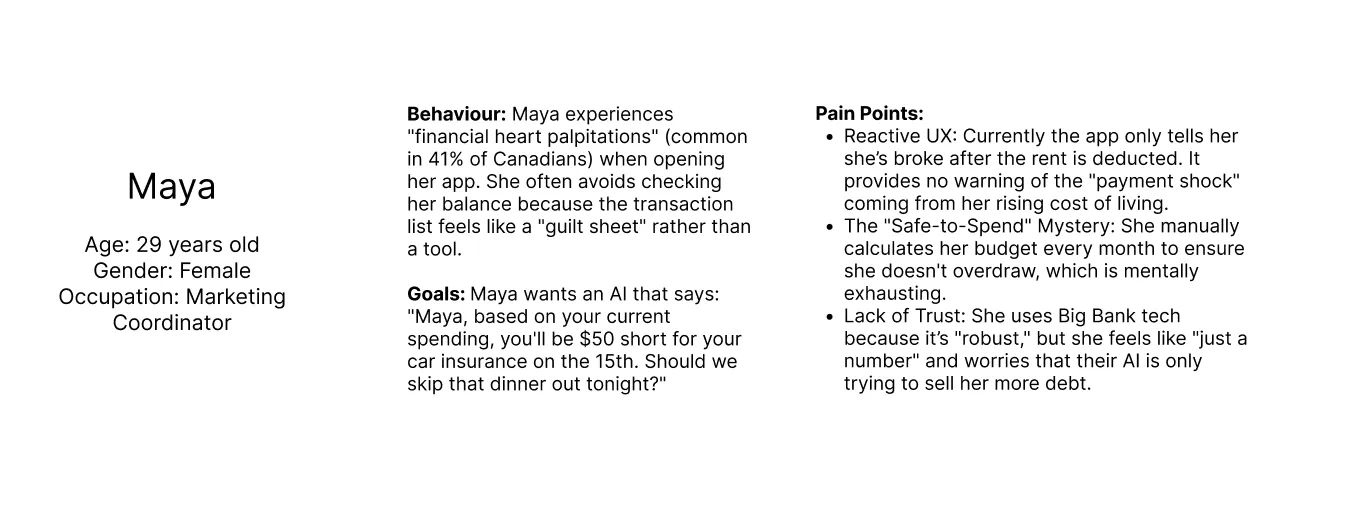
The challenge with standard banking apps is that they ignore the emotional weight of money. The reactive nature focusing on transactions list can be mentally exhausting. This in turn adds to stress of budgeting every month in order for users to know how much can they safely spend in future.
Financial services use complex jargon making it difficult for users to form trust. Not being able to understand terms like APY, Money Markets creates a barrier leading people to instantly shut down an offer that may benefit them. Reaching out to support can be even more daunting for certain people who may not want to talk over the phone.
The solution is to create an AI assistant that acts as a support partner that not only triages inquiries but also offers detailed explanation within the context of their account.
Competitor Analysis
AI integration is gradually becoming a major battleground for financial institutions. The Big Banks have the most advanced AI integration in the Canadian banking scene.
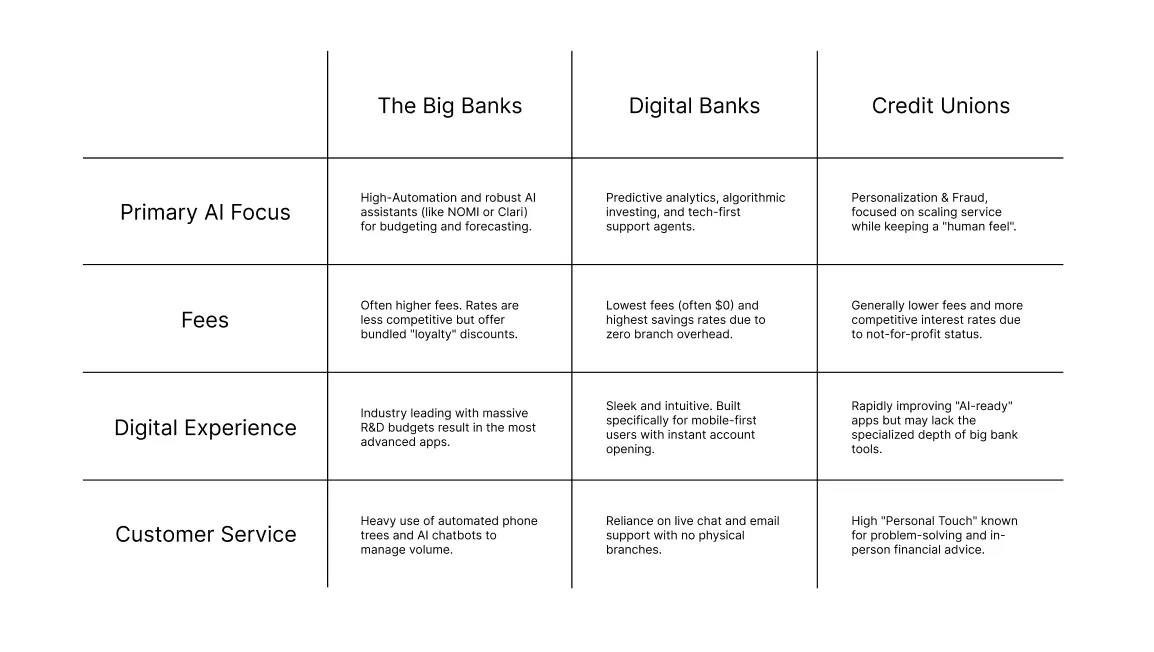
Quick competitor analysis shows how big banks can offer fully autonomous AI budgeting which smaller credit unions cannot match yet. However, with the focus shifted to use AI to augment customer experience, we can go a long way in securing an edge.
Interviews
To understand the scope of the project and test the competitor analysis, my research plan was to conduct interview narrowing down a few main points:
- What makes users go for the big banks?
- What do they look for in their digital experience with the apps?
- What are their pain points on AI integration and what kind of support do they expect?
Takeaways
The key takeaways from 5 user interviews are as follows:
- 100% of participants chose one of the major banks based on friends and family recommendations and large-scale adoption among the general public.
- 3 out of 5 use AI features but are not happy with limited contextual AI support.
- 4 out of 5 participants would like predictive analysis to help with budgeting than just past transactions.
User Persona
The information I gathered from user interviews narrows down the key takeaways from the competitor analysis. Keeping this in mind, I was able to confirm my ideal user and their pain points.
Phase 2: Goals and Strategy
Project Goals
Based on the research and data collected from interviews and competitor analysis, the problem is clearly stated and ready to be moved to the next stage of coming up with an MVP.
Features
I created a list of features for laying down a foundational MVP and a more progressive application later on.
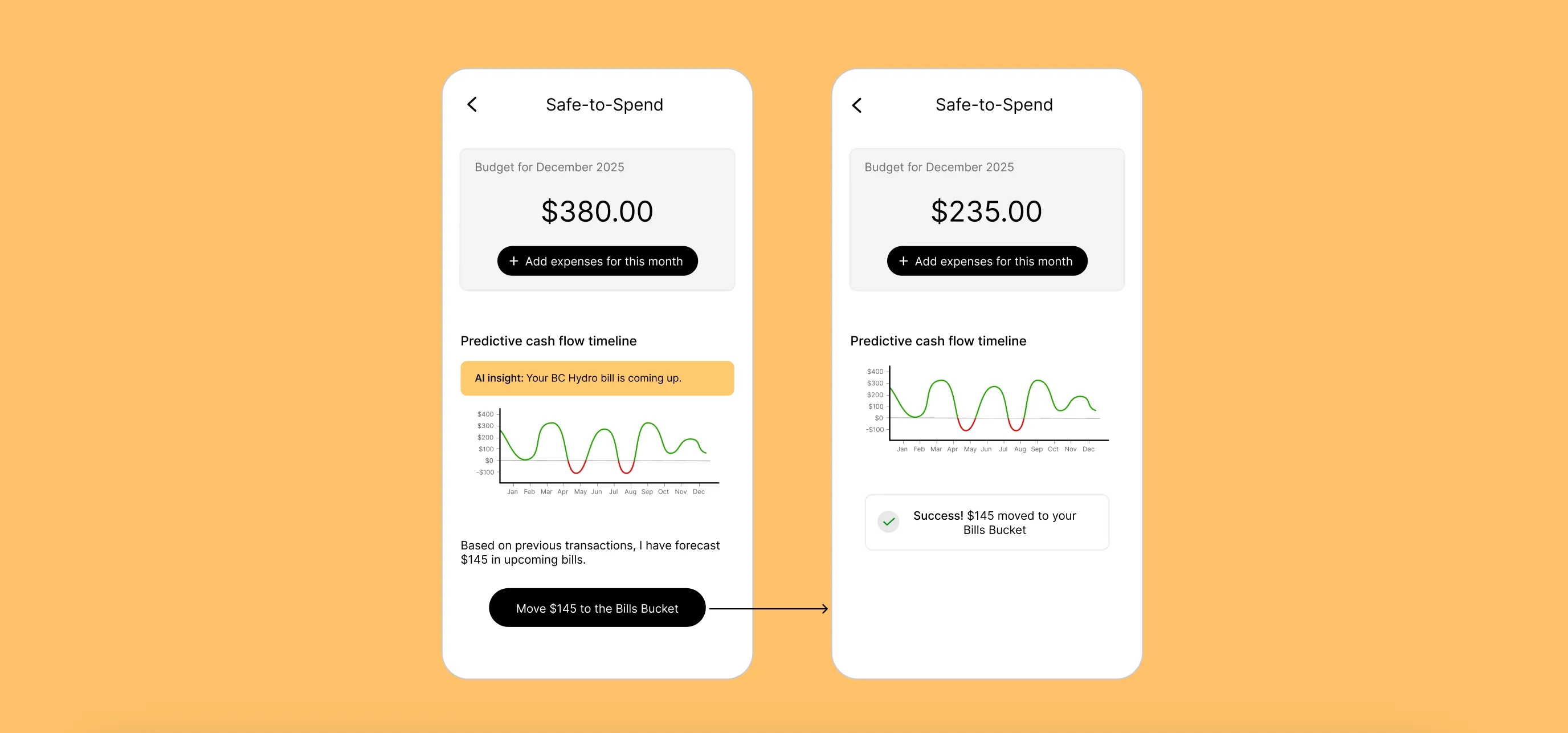
- Safe to spend widget
- Predictive cash flow timeline
- Contextual support
- Autonomous micro-savings
Phase 3: Ideate and Design
User flow
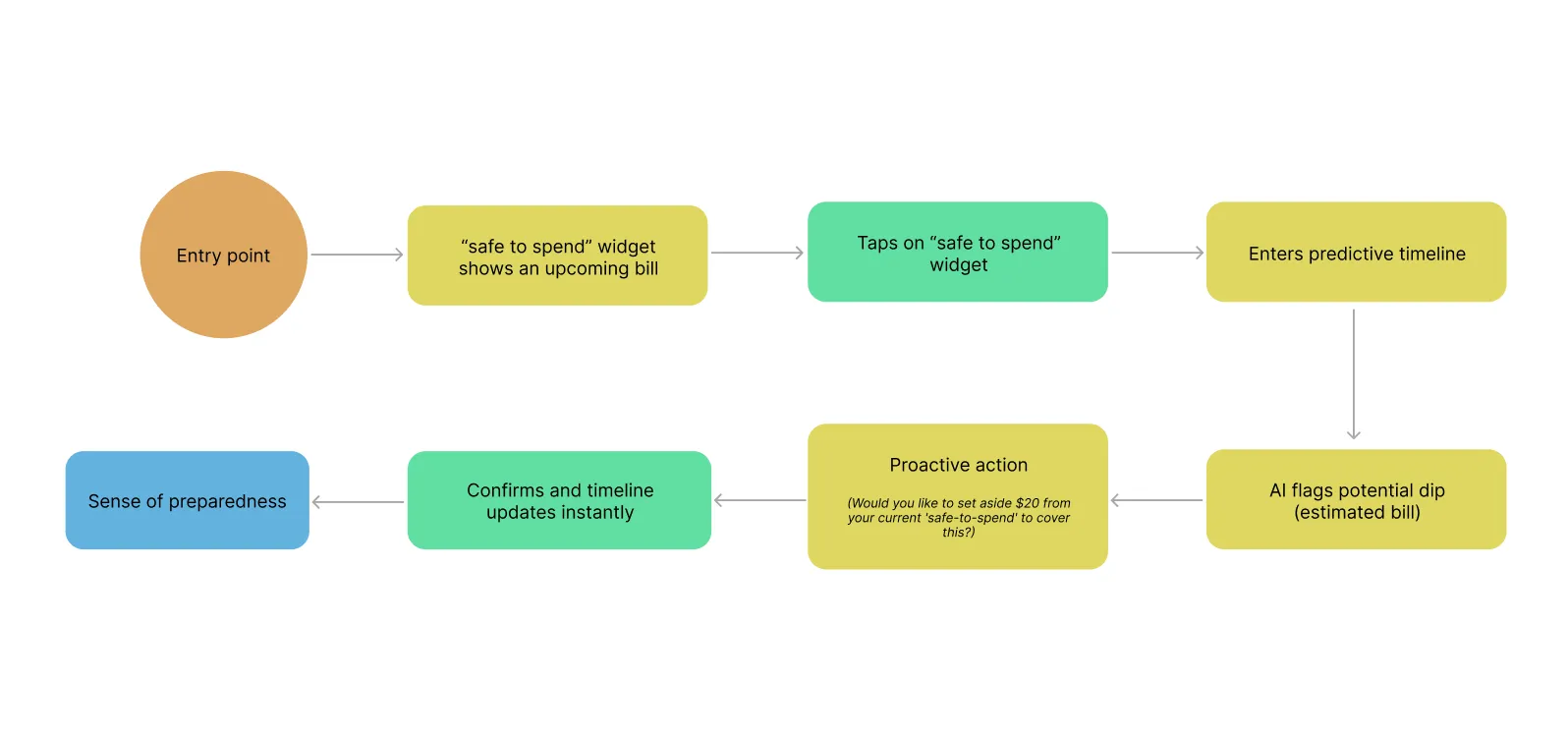
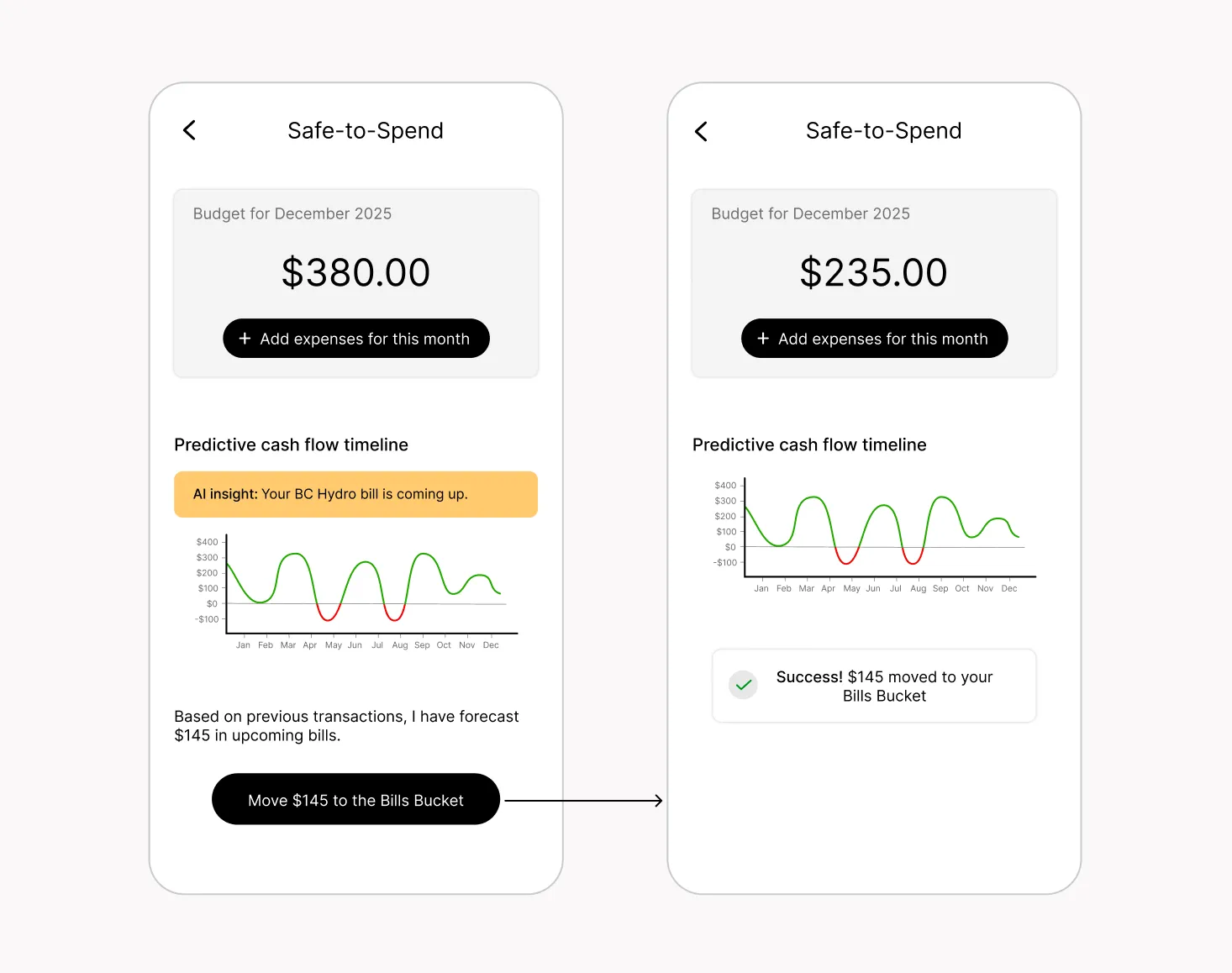
Maya logs into the app to see if everything is on track with her budget. She is hoping for a sense of preparedness and financial stability. With the new AI widget, she is presented with an expected bill based on the previous account transactions and the widget supports her in managing the payments.
Lo-Fi Wireframes
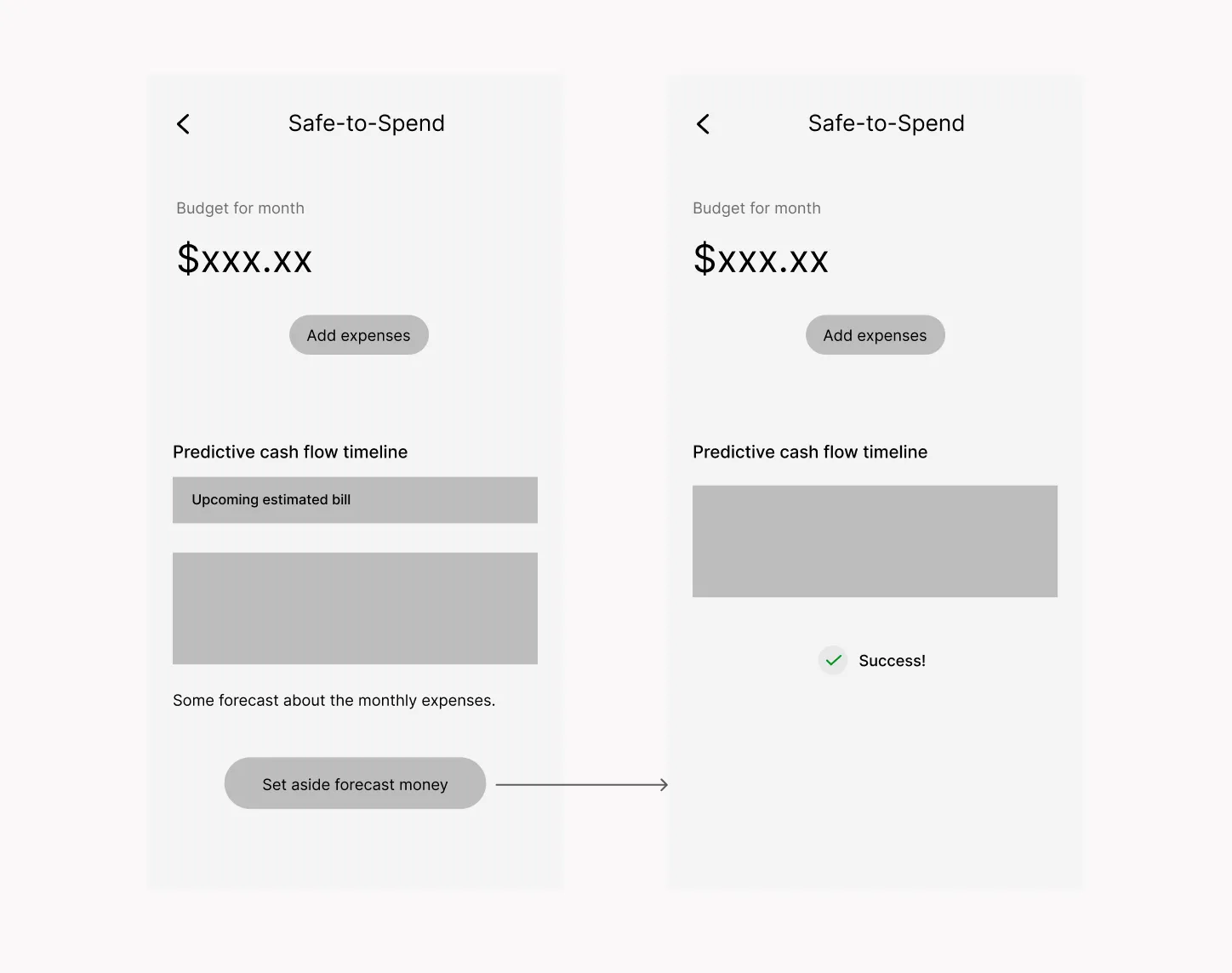
Here's some lo-fi wireframes to understand if visual hierarchy makes sense and is usable.
Hi-Fi Wireframes
I made a really simple lo-fi wireframe for the safe-to-spend widget and here is the more polished and clean hi-fi version of wireframes. It takes the user through the process of setting aside expenses for the estimated forecast created by AI.
Summary
This UX design project focuses on transforming credit union banking from a reactive experience into a proactive, predictive one through an AI Financial Assistant. Driven by research into the emotional stress of budgeting and the complexity of financial jargon, the project introduces an MVP featuring a 'Safe-to-Spend' widget and predictive cash flow timelines to help users anticipate upcoming expenses rather than just reviewing past transactions. The design aims to build trust and provide a 'windshield' view of personal finance that empowers users to manage their money with confidence and clarity.